Team outing vs team building: discover the key differences, the benefits of each and how to choose the right experience for your employees.
Your employees work together every day. But when was the last time they had a chance to connect, have fun and experience something together outside the office?
That’s where corporate experiences come in.
But when planning one, there’s an important question to consider: Should you organize a team outing or a team building activity?
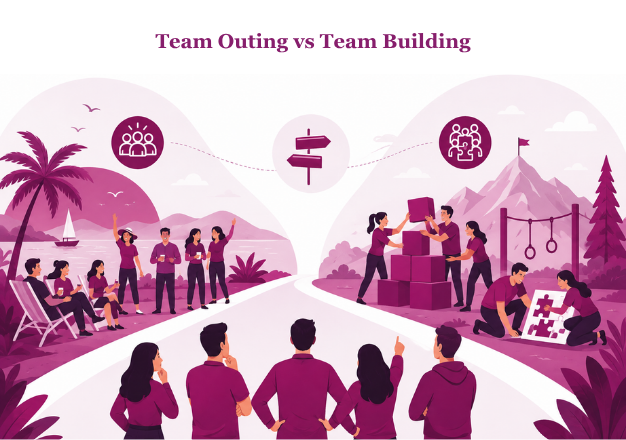
While the two are often used interchangeably, they serve different purposes. A team outing is primarily about stepping away from work, relaxing and connecting socially. Team building, on the other hand, uses shared experiences and challenges to strengthen communication, collaboration and trust.
So, which one is better for your company?
It depends on what you want your team to take away from the experience.
What Is A Team Outing?
A team outing gives employees the opportunity to step away from their everyday routines and spend quality time together in a more relaxed environment.
It could be a resort day, adventure trip, recreational activity, meal or simply a fun day outside the office.
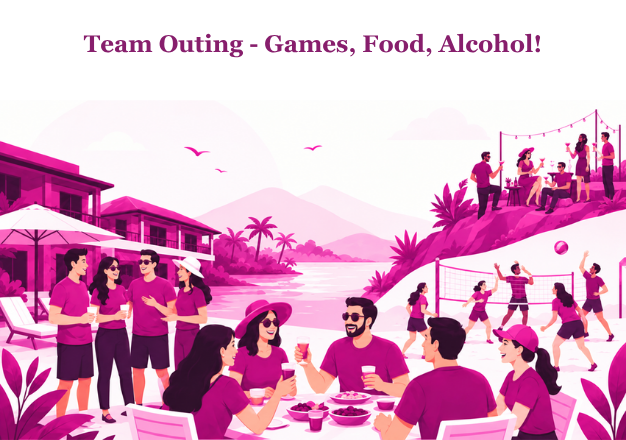
The focus is on relaxation, socializing and creating shared memories. Team outings are especially great for celebrating milestones, rewarding employees, welcoming new team members or simply giving everyone a much-needed break.
Sometimes, your team doesn’t need another meeting.
They just need a chance to have fun together.
What Is Team Building?
Team building goes a step further.
Instead of simply bringing employees together, it gives them a reason to work together.
Through activities such as treasure hunts, Amazing Race challenges, sports, build challenges and creative experiences, employees communicate, solve problems, make decisions and rely on each other’s strengths.
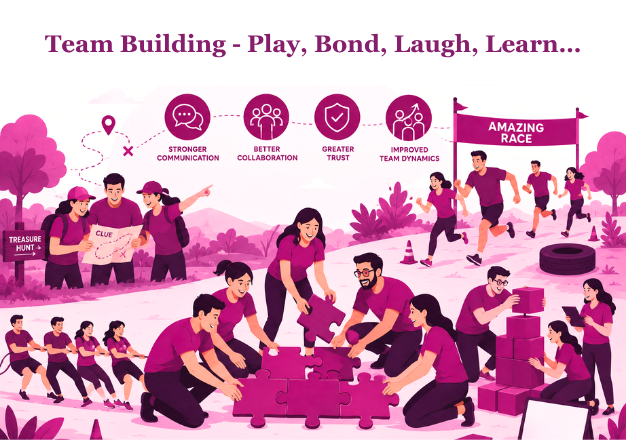
The result? Stronger communication, collaboration, trust and team dynamics.
If you are deciding what to actually run on the day, we break down five of them in our guide to the best team building activities for work.
And importantly, team building doesn’t have to feel like work.
The best team building experiences are the ones where employees are having so much fun that they forget they’re building a stronger team.
Team Outing vs Team Building: What’s The Difference?
| Team Outing | Team Building |
|---|---|
| Focuses on relaxation and socializing | Focuses on collaboration and connection |
| Usually less structured | Involves structured activities and challenges |
| Great for celebrations and rewards | Great for strengthening team dynamics |
| Employees spend quality time together | Employees actively work towards a common goal |
| Main goal: Enjoyment | Main goal: Enjoyment + Development |
So, Which One Should You Choose?
If your goal is to reward your employees, help them unwind and create memorable moments, a team outing may be exactly what you need.
But if you want to strengthen communication, encourage collaboration and build deeper connections, team building can deliver more.
However, here’s the best part:
With Woosh Biz, you don’t always have to choose one.
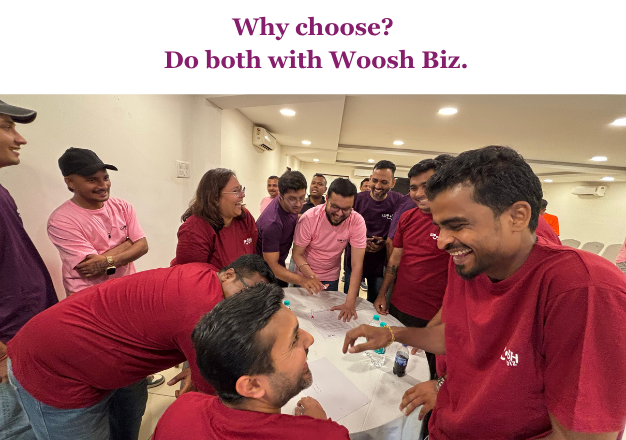
Why settle for a day of simply being together when you can create an experience where your team relaxes, participates, connects and grows together?
A thoughtfully designed corporate experience can combine the best of both worlds — the freedom and enjoyment of a team outing with the energy and purpose of team building activities.
Because the most memorable corporate experiences don’t just give employees a day away from work.
They give them a reason to come together.
Create Better Team Experiences With Woosh Biz
At Woosh Biz, we believe corporate experiences should be more than just a day away from the office.
They should spark conversations, bring people out of their comfort zones, encourage collaboration and create stories that teams remember long after the event is over.
Whether you’re planning a corporate team outing, team building event or employee engagement activity, we create experiences that help teams connect, collaborate and bond.
Because when your team connects better, they work better together.
Get in touch with Woosh Biz to plan an experience your team will actually remember.